AMD has released the first true 8 core processors. Current Intel i-series chips have up to 4 cores with Hyperthreading, which displays 8 cores to the OS. However, the new AMD architecture may ultimately provide some performance benefit in certain applications (such as rendering).

Initial benchmarks for the new ‘Bulldozer’ architecture show that they are roughly on-par with some of the midrange Intel offerings. However, the new processor architecture has the potential to offer significant gains as applications are optimized and as price points improve.

In Revit terms, more cores means faster rendering.  In day to day computer terms, more cores means you can do more things faster.

In terms of technology and competition, I guess we can be glad that there are at least two big CPU manufacturers.  If you want to read about their mutually assured destruction, check out this link.

More information about Bulldozer CPUs here:
Unlock Your Record Setting AMD FX Series Processor Today

and here
Bulldozer (microarchitecture) – Wikipedia, the free encyclopedia


Jose doesn’t seem to think they are super-important:

Outside of Revit there are tools for managing and finding families that are more powerful and faster than any naming convention would ever allow anyone to do. And these tools have only started showing up. I’m certain that within a year there will be more options available than published naming standards.

Inside of Revit things could quickly change as well. I don’t have any specific knowledge of how or if Autodesk plans to sort out the challenges of finding families within the project browser (and if I did, I wouldn’t be able to tell you), but anyone can see that the current solution is sub-par. An improvement could come as soon as within a few months.

via
Andekan � Blog

And Jose, I certainly agree that ‘the current solution is sub-par…’

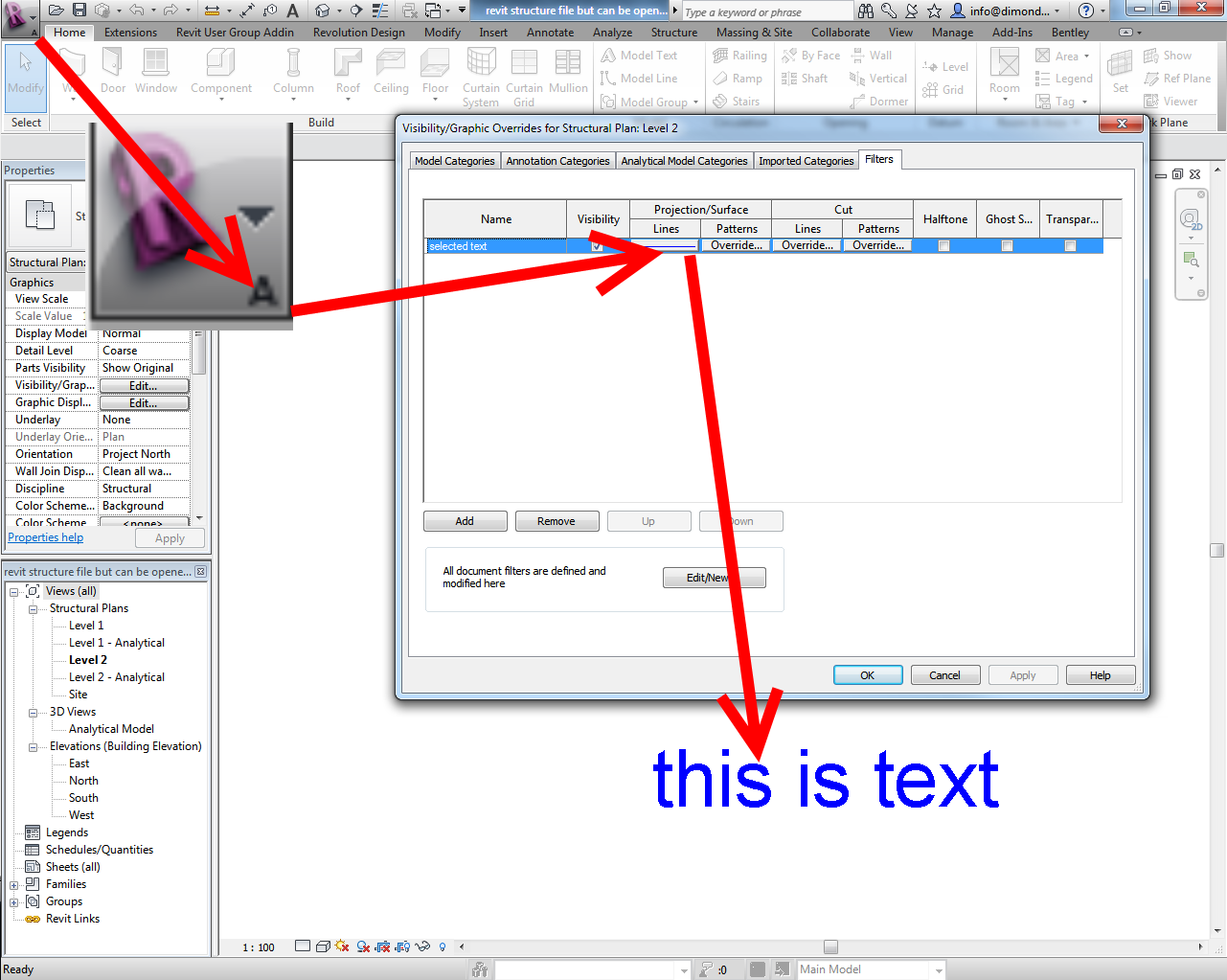
The easiest way I have found to get the buttons back is to learn the keyboard shortcuts for each command, where upon, once used the buttons themselves seem to magically reappear in the ribbon. The keyboard shortcuts are PE for Parallel Pipe and PO for Parallel Conduit.

via
Applied Software Blog: RMEP Parallel Pipe and Parallel Conduit Command Buttons

A while back, I asked you guys to request that the ‘Save Selection’ feature be added to Revit Architecture. Even though we all apparently made quite a bit of noise with all of our requests, the Factory has not yet come to the party and given us a nice little Subscription Advantage Pack with the Save Selection feature.

It is a bit disappointing really.

In any case, if you want to use Save Selection now, there is a workaround. Just Save a Selection using Revit Structure, open the file in Revit Architecture and you should be able to apply that saved selection to applicable views. You can’t edit it in RAC though, you have to go back into RST to do that. It is an unwieldy and painful workflow – but it does work.

I guess you could also workshare the file, have an instance of RAC and an instance of RST open and working on the same file…but it probably won’t be much faster by the time you Synchronise / Reload.

Here is a little video:

Here is where I originally requested that we ask for the Save Selection feature in Revit Architecture:
What Revit Wants: RAC Users – lets get the Save Selection feature now!

Interesting post from Phil again today. He links to Richard Harpham’s profile on LinkedIn. So who is Mr Harpham?

Well, the interesting thing is that he WAS:
Senior Director AEC Industry Marketing
Autodesk
January 2010 – May 2011 (1 year 5 months)

but now he is the:
Sales and Marketing Director at M-SIX

Phil’s post:
Arch | Tech: One More Thing (™)

Steve makes a connection between some videos showing online collaboration tools and M-SIX at:
Revit OpEd: M6 or M-Six

So, anyone want to have a go at what VEO™ really stands for?

In Google Docs, you probably know that you can upload files and view them with the Google Docs Viewer.

But did you know that Google Docs Viewer can display the following formats?

  • Apple Pages (.PAGES)
  • Adobe Illustrator (.AI)
  • Adobe Photoshop (.PSD)
  • Autodesk AutoCad (.DXF)
  • Scalable Vector Graphics (.SVG)
  • PostScript (.EPS, .PS)

If you want to view something online, just put the URL of the file in at the following link:
Google Docs – Viewer

For a more complete list of filetypes, check out this link.