Just in case you missed it, Update Release 3 is available for all 4 Revit flavours (links below).

Key fixes (as per documentation):

  • Improves stability when using Hardware Acceleration, Graphics Mode.   
  • Improves stability when opening projects which utilize Extensible Storage.
  • Improves visual fidelity between canvas and printed output.   
  • Improves visual fidelity of hidden lines, MEP pipe centerlines and haloed gaps when not using Hardware Acceleration, Graphics Mode.   
  • Improves Structural family data integrity during upgrade of project.
  • Improves data integrity when canceling Save As operation.
  • Improves interaction between Revit Server 2013 and Riverbed compression.
  • Enables users to browse Revit Server Networks when a bound workstation cannot contact the Domain Controller.  

 Dave Baldacchino informs us that this update includes the Hotfix that fixes some nasty non-WYSIWYG bugs (when printing in vector):
Anyway, I also checked that the recent Update 3 (for OneBox)incorporates this hotfix as well, so just skip it altogether and install Update 3 as fast as you can. There are separate downloads for the stand-alone packages.
via
http://do-u-revit.blogspot.com.au/2013/06/what-you-see-is-not-what-you-get.html

Link for RVT (Onebox):
http://usa.autodesk.com/adsk/servlet/ps/dl/item?siteID=123112&id=21891257&linkID=21208796

Link for RAC:
http://usa.autodesk.com/adsk/servlet/ps/dl/item?siteID=123112&id=21890399&linkID=9273944

Link for MEP:
http://usa.autodesk.com/adsk/servlet/ps/dl/item?siteID=123112&id=21891036&linkID=21208796

Link for RST:
http://usa.autodesk.com/adsk/servlet/ps/dl/item?siteID=123112&id=21890545&linkID=21208796

I guess the fact that we are receiving a significant update to 2013 after getting 2014 will be a further warning to some users to delay the 2014 rollout…

You are getting this message because you downloaded a version of IFC Exporter for Revit or  IFC Export Alternate UI for Revit prior to June 14, 2013.  We have posted an update to both, which you can get to using the links below:
 
2013:
 
IFC Exporter for Revit 2013 (v2.11):
 
IFC Export Alternate UI for Revit 2013 (v1.11):
 
2014:
 
IFC Exporter for Revit 2014 (v3.3):
 
IFC Export Alternate UI for Revit 2014 (v2.3):
 
 
Updates from the previous versions are listed below.  Please upgrade to the newest version! 
 
If you do not wish to receive upgrade notices, please reply and I will make sure you don’t get these notices in the future.
 
Regards,
Angel Velez
Senior Principal Engineer
Autodesk, Inc.
 
via email

A recent article on gostructural.com describes the basic tools used for coordination between disciplines in Revit.  Its worth a read for “Revit coordination beginners.” 

It covers the three primary coordination tools in vanilla Revit:

  • Copy / Monitor
  • Coordination Review
  • Interference Check

Here are a few little gems from the article:
The elements that can be included in the copy/monitor process include: Levels, Grids, Columns, Walls, Floors, and Openings

Coordination Review actions:

  • Postpone: take no action on the element
  • Reject: makes no change to the element in the host file
  • Accept Difference: Accepts that a change has been made between the monitored elements but no change is needed between the elements
  • Modify/Rename/Move: If the element is renamed/moved, this option will rename/move the element to match the monitored element
  • via
    http://www.gostructural.com/magazine-article-gostructural.com-6-2013-coordinating_your_autodesk_revit_structure_project_with_other_revit_disciplines-9339.html

    Heads-up: Daniel Hughes on LinkedIn

    Ever wanted to get a Tag to pick up the hardcoded Elevation value given to a nested Family?  Then check out this great little thread and cool answer by Julien!

    Answer:
    You need to set a SP in the nested family.
    Make the plate geometry attached to ref planes that are not the 2 from the template. Assign a SP to the distance between the RP at center of geometry and the RP that defines origin. SP will be by instance. Beware of directions for correct behavior when loaded in the host.
    In the host family, add the same SP, select the plate, and in properties palette, look for the tiny button on the left. Click and choose the SP you’ve added. The insert point of the plate must be set to the ref level of the host.
    Now you have the elevation of the plate driven by a SP in the host. Create a tag for this SP. You’re done. 

    By Julien Benoit at
    How can I get this parameter into a tag?

    After a 10 year association with Dimond Architects, I have decided to move to Adelaide and seek out new opportunities.

    We part on very good terms, and I would like to take this opportunity to thank the Directors, Ian and Sharyn Dimond, for their awesome support over the past decade.  I wish them all the best and hope that Dimond Architects continues to encourage professional development and forward thinking – an ethos that has allowed What Revit Wants to become what it is today.

    I am currently looking at a couple of different employment options, and I will keep you posted as to where I end up.  Feel free to contact me if you know of any potential vacancies in Adelaide that would suit a BIM / Revit / IT guy such as myself 🙂

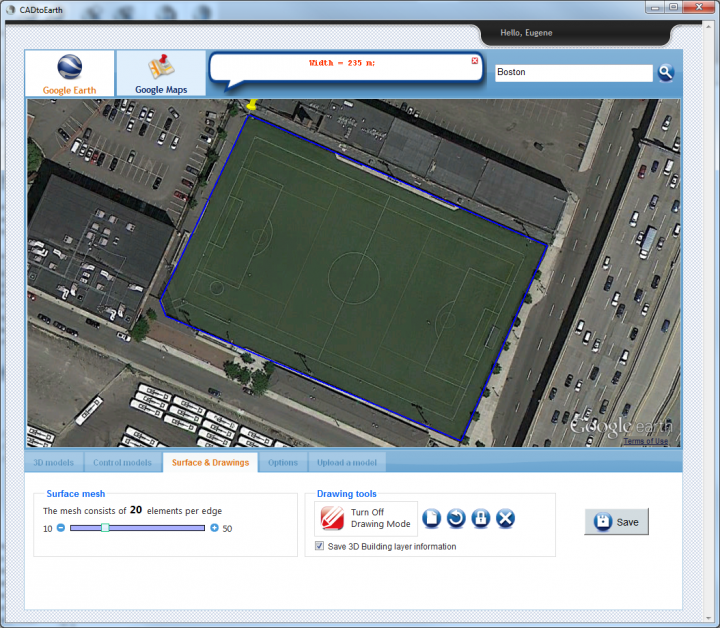
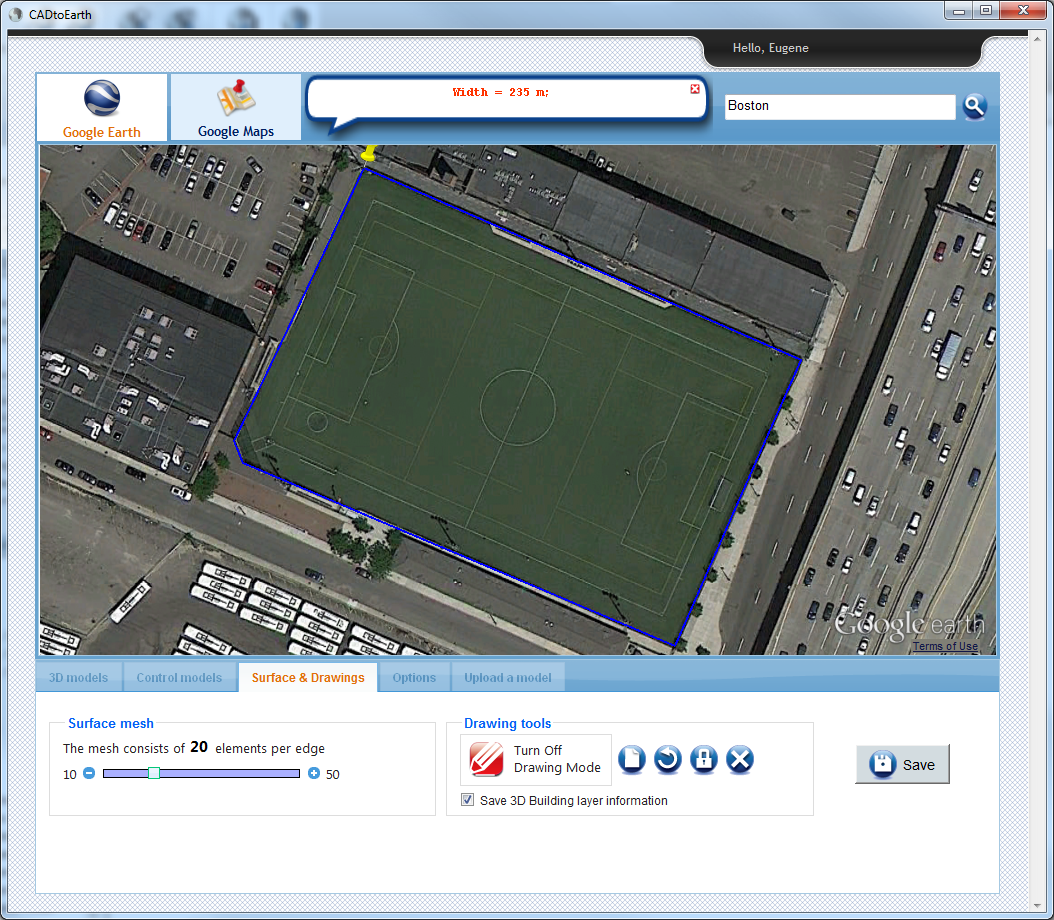
    I previously posted about CADtoEarth at:
    https://wrw.is/2012/08/quickly-add-google-earth-site-context.html

    Although some people have struggled to implement it or understand how it works, I still like it as a quick way to import Google Earth topography as site context.  The new version is on Exchange at:
    http://apps.exchange.autodesk.com/RVT/en/Detail/Index?id=appstore.exchange.autodesk.com%3acadtoearth%3aen

    Video:

    via email:
    We, at AMC Bridge LLC, are excited to announce availability of new version of CADtoEarth for Revit the application that allows for seamless integration between Revit and Google Earth.

    The CADtoEarth 2.0 add-in now allows users to create personal accounts on the CADtoEarth web application and provides individual control over the visibility of uploaded data.

    We continue improving our applications, so please, dont hesitate to contact us at contact@amcbridge.com if you encounter any problems with the new version, or have any enhancement requests.

    How to use

    1. Download and install the latest, free Google Earth applicationExternal link icon. Existing Google Earth users should ensure they have updated to the latest version (version 7.0.2 or newer).
    2. Save the qldglobe.kml file to your computer and double click on the file.

    Some notes:
    The default imagery used in Queensland Globe is the best available to the Queensland Government that can be released for public viewing.

    All layers have been pre-set to only display between certain scales, i.e. more detailed layers will only display at larger scales (you may need to zoom in to see them).


    new mapping images showing the entrance to the Clem-7 tunnel at Bowen Hills
     

    High resolution aerial photography flown between August and December 2012 has recently been added for Brisbane, Ipswich, Moreton, Mackay, Redlands and the Sunshine Coast.

    Main page:
    http://www.nrm.qld.gov.au/mapping/queensland-globe.html