Are you interested in Tekla to Revit (and back) interoperability?  Then check out:
Tekla-Revit Interoperability Forum | LinkedIn

Various plug-ins and workflows are available which may help you coordinate the two systems effectively.

One such workflow focuses on using BCF plugins to coordinate and transmit Comments:

  • Identify an issue in your model / linked model
  • highlight and comment in the plugin tool
  • send tiny file to dropbox /shared server / email
  • fellow consultant opens comment which zooms to correct location in Revit / Tekla Structures and can immediately take action. 

From Highlight and comment directly from Revit into Tekla Structures (and back again) | LinkedIn

Heads-up:
Google Translate
Another nice workaround by Philip Chan – if you want to change one of Revit’s built-in Type Parameters (derived from a Family Template, such as Door Fire Rating) to an Instance Parameter, you just have to take the Family on a little round trip to a more flexible Family Category.

For example:

  1. New Door based on Door Family Template
  2. Switch to Generic Model Type
  3. Change built-in Type Parameter for Fire Rating to Instance
  4. Switch back to Door Category

You can read Philip’s whole post at:
Phil-osophy in BIM: Hacking System Parameters in Door Family

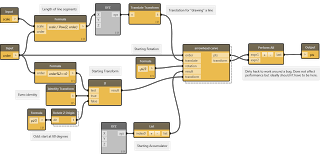
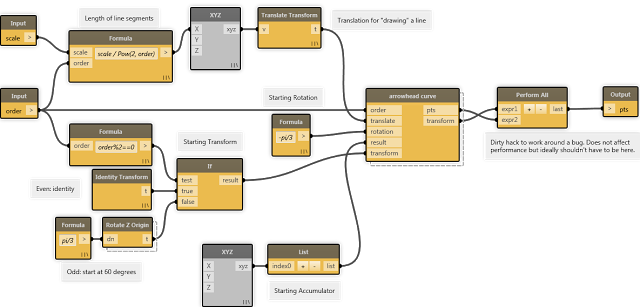
These fractals can both be drawn by emulating a pen: we keep track of the direction the pen is facing, and we can make the pen draw lines of a certain length in its current direction. We can turn the pen, and we can draw with the pen. These can be emulated with Transformations: turning applies a rotation to the pen’s transformation, and drawing adds a translation (and the end point of the draw operation can be stored as an XYZ for creating line geometry later).

Read the whole post:
Steellworks: Dynamo Fractals

Following the release of BIMForum’s LOD spec, there has been a bit of a blog discussion happening, involving at least the following three posts:

practical BIM: LOD, are we there yet
…using BIM for the creation of construction documentation is a valid use, and one that needs to be encouraged

All Things BIM: LOD Reply: PracticalBIM
The simple answer starts with an equation:

Deliverables = Model + x

In this equation, x refers to anything else that might accompany a model being offered as a project deliverable. This might include drawings, specifications, napkin sketches, and so on. The LOD Specification addresses ONLY the “model” part of the equation – it does not serve as a guide to complete project deliverables in current work flows.

And:
BIM Fix Blog: Developing LOD (Level of Development)
LOD should never be seen as the design is complete, or “design sign off”.  Just because an element is; e.g. LOD 300, does not mean it will not change. We are in a design and construction environment. Design changes, coordination, rationalisation, value engineering & preferred construction methods, will all influence the element’s size, shape, location, and orientation. Design sign-off will continue to have the traditional design stage mile-stone approvals (e.g. Design Development and Construction Documentation)

Heads-up:

Great tip from Philip Chan.  Basically:

  1. Make a Material Take-off / Multi Category
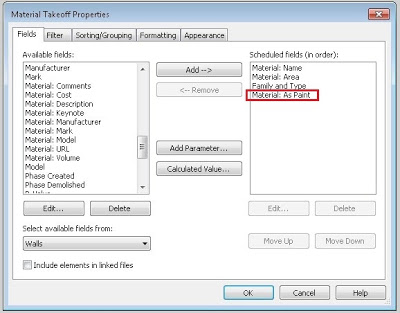
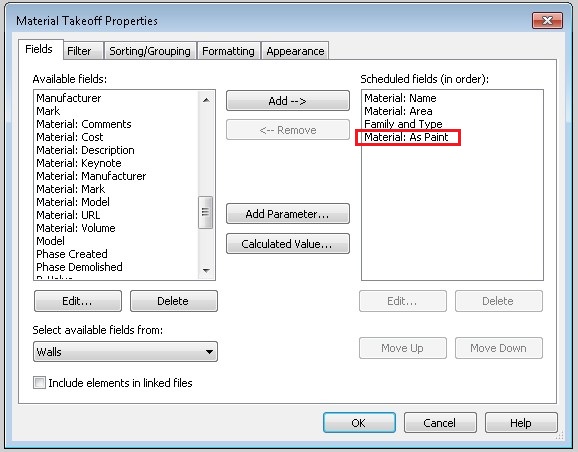
  2. Add the Material: As Paint parameter
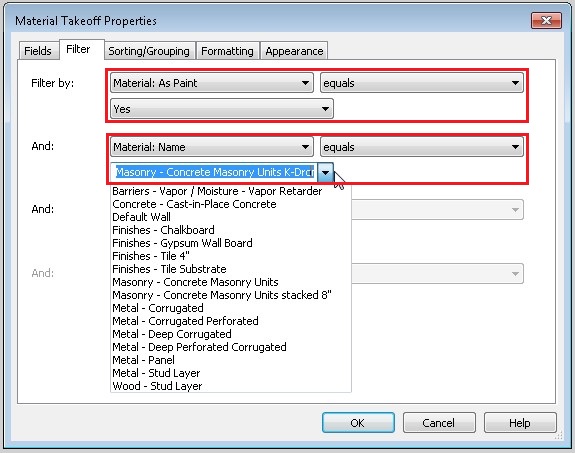
  3. Filter by this parameter = Yes (now the schedule is only showing painted surfaces)
From here, you can right click on a row in the Schedule and click “Show” – this will open a relevant view and highlight the element that is hosting the Split Face.  Nice!

Here’s his workflow:
Next window allows me to add fields to my schedule, I then notice there is a field/parameter called “Material: as paint”. Sounds like something suitable in this occasion.

As I move on to the filter tab, something interesting shows up…
I can now set the “Material: as paint” to equal to “Yes”, which means I tell Revit that this schedule only look for the “Paint” surface on all walls; the next filter rule, I can even set it to a specific material to be included in this schedule.


The last thing is to tell Revit to calculate total area for this particular material.

Once this is done. Volia! I can now let Revit to keep track on all my “paint” surface.


via

“new ability to import and visualize massive datasets captured from reality as point clouds. If you are a modeler, you can view point clouds in true color in the 3ds Max viewport, interactively adjust the extent of the cloud displayed, and create new geometry in context by snapping to point cloud vertices.”

Coming 30 September 2013

Read more:

There is a difference between BIM and automation.  Using Revit for BIM isn’t automatic – you need skills, time and effort to make it work.

Certain Revit add-ins fill a real need to make that leap between ‘hard work BIM’ and ‘automated BIM’.  SAuBIM – Code Calcs is a proven tool for automating compliance checks related to room areas.  It has been updated to version 2.0, and is working with 2013 and 2014.

Oh, and did I mention that Harry Mattison has been involved in the process – you won’t be disappointed!

As Jeff says:
Simply click “Update Tags” and you have calculated data semi-automatically updated into your room tag!

You can get hold of Code Calcs for Revit 2013 and 2014 by using this link.

If you haven’t heard of it before, it automatically creates schedules for:

·         Occupancy Loads (Per Room)
·         Required Male Water Closets
·         Required Female Water Closets
·         Required Lavatories
·         Required Drinking Fountains
 
and it allows you to tag this important data in intelligent Room tags.

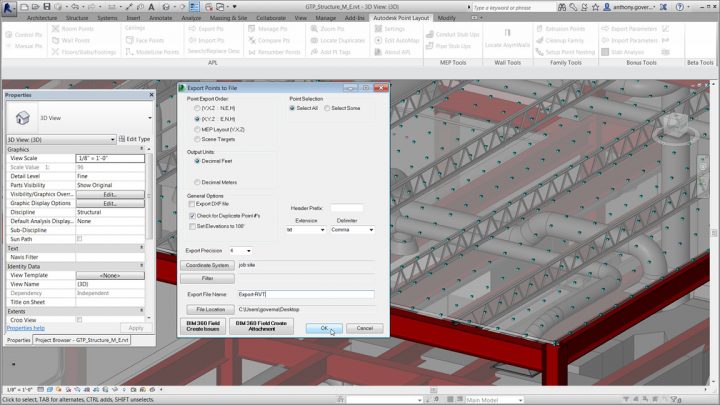
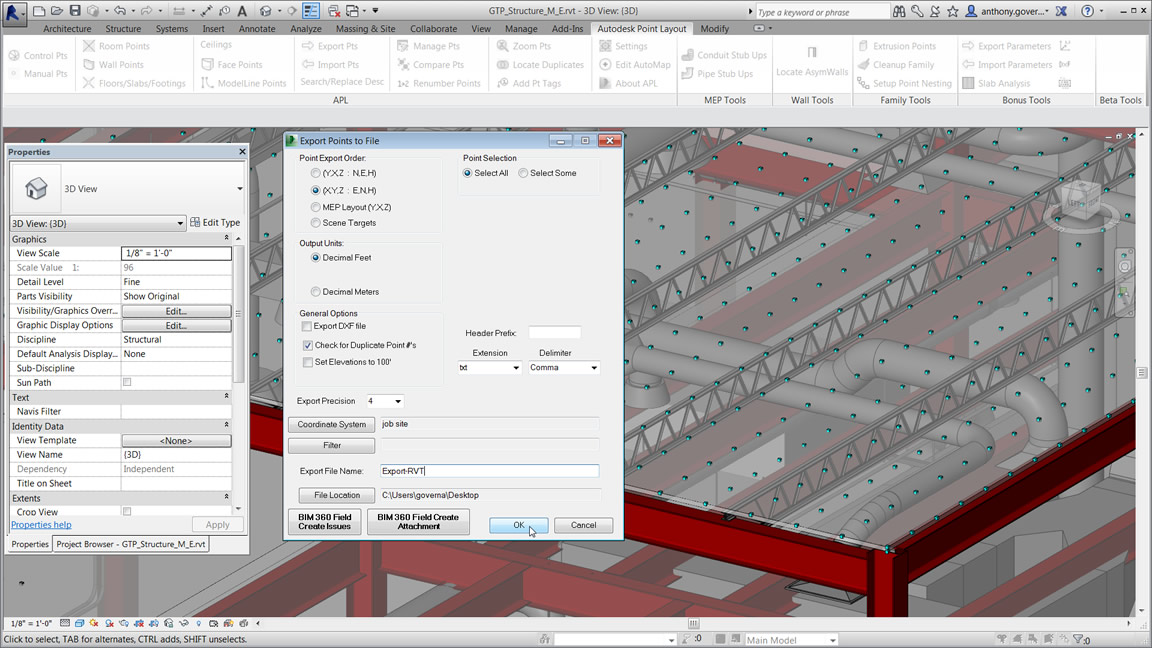
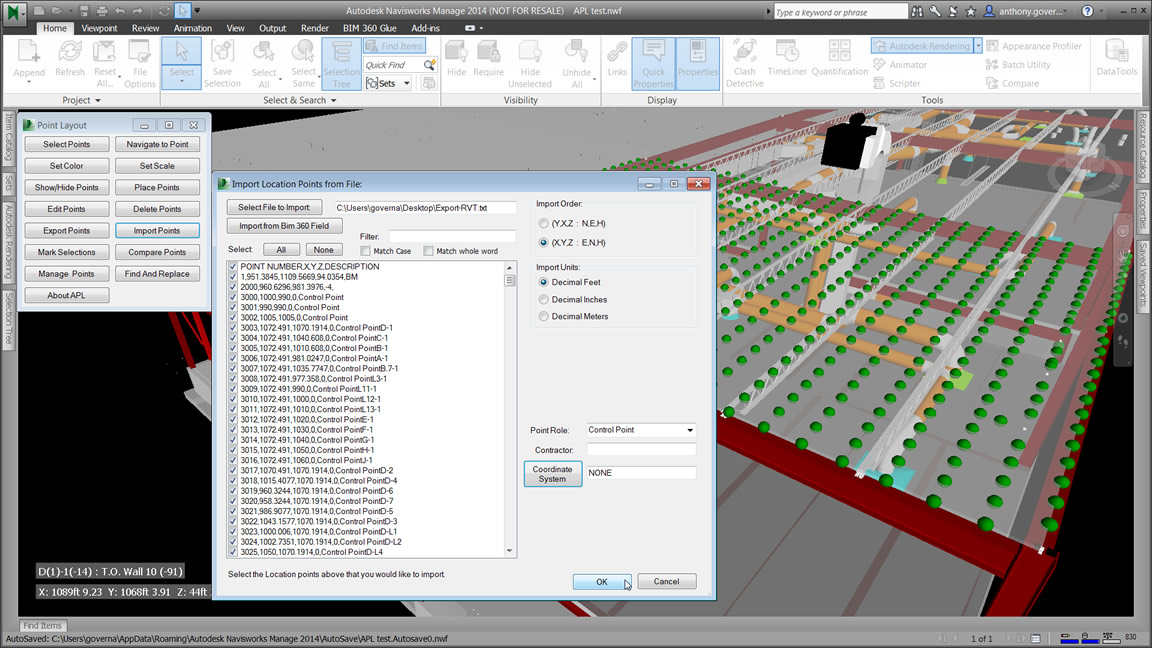
Interesting – this kind of turns the point cloud technology upside down… It goes something like this:

  • Revit model 
  • to points
  • to site survey hardware (set out the building)
  • build it
  • then laser scan the as constructed
  • compare points of the as built model for quality control
The part I’m trying to get my head around is this – these aren’t really point clouds, but rather, they are setout points of Revit BIM 3D elements for construction use.  Perhaps the word ‘point’ is going to be more popular than the word ‘BIM’ this year 🙂

Learn more / trial at:
Point Layout | Construction Layout Software | Autodesk